
number of stars pdf
Understanding Star Counts in PDF Data
PDFs frequently archive astronomical star count data‚ presenting discoveries like those from Abell 370 and distant galaxies 6.5 billion light-years away.
Astronomical star counts are fundamental to understanding the universe’s structure and evolution‚ often documented and disseminated via PDF reports. Recent advancements‚ utilizing telescopes like Hubble and James Webb‚ have enabled detections of unprecedented numbers of stars at extreme distances – up to 6.5 billion light-years.
These PDF-based datasets‚ including observations of galaxy clusters like Abell 370‚ provide crucial insights into galaxy formation and cosmological models. Estimating the total number of stars‚ currently around 100 billion in the Milky Way‚ relies heavily on analyzing these complex PDF archives.
The Challenge of Counting Stars
Counting stars‚ particularly at vast cosmic distances detailed in PDF reports‚ presents significant hurdles. PDF data from sources like the James Webb Telescope reveals record-breaking detections‚ yet accurately quantifying these stars is complex. Factors like interstellar dust‚ telescope resolution‚ and redshift distort observations.
Analyzing PDF-formatted star count data requires specialized software and statistical techniques to overcome these challenges. The sheer volume of data‚ often presented in PDF form‚ further complicates the process of determining precise stellar populations.

Data Sources for Star Count PDFs
PDF star count data originates from powerful telescopes: Hubble‚ James Webb‚ and ground-based observatories‚ documenting discoveries like those in Abell 370.
Hubble Space Telescope Data
Hubble has been instrumental in generating PDF-archived star count data‚ particularly regarding galaxy clusters like Abell 370‚ located approximately 4 billion light-years from Earth. These PDF reports detail individual star detections‚ contributing to our understanding of distant galaxy populations. Hubble’s observations‚ often compiled into detailed PDF documents‚ allow astronomers to analyze star distributions and estimate total star numbers within these clusters. The data aids in tracing the evolution of the universe and testing cosmological models‚ providing valuable insights into star formation across vast cosmic distances‚ all readily available in accessible PDF formats.
James Webb Space Telescope Data
JWST represents a leap in star count research‚ producing PDF-based datasets revealing record numbers of stars in distant galaxies – a feat previously considered nearly impossible. These PDF reports document detections from galaxies 6.5 billion light-years away‚ pushing the boundaries of observable star populations. The telescope’s enhanced sensitivity allows for detailed star-by-star analysis‚ compiled into comprehensive PDF archives. This data is crucial for understanding early galaxy formation and refining estimates of the total number of stars throughout the observable universe‚ all accessible through detailed PDF publications.
Ground-Based Observatory Data
PDF reports from ground-based observatories contribute significantly to star count research‚ often focusing on closer galactic structures like the Abell 370 cluster‚ approximately 4 billion light-years distant. While limited by atmospheric interference compared to space telescopes‚ these observations provide valuable complementary data‚ frequently archived in PDF format. These PDF documents detail star counts and analyses‚ aiding in understanding galactic evolution. Combining this data with JWST and Hubble findings‚ presented in similar PDF formats‚ refines our overall estimates of the number of stars.

PDF Format and Astronomical Data
PDFs serve as a standard archive for disseminating star count discoveries‚ including those detailing ancient celestial bodies and distant galaxy observations.
Why PDFs are Used for Star Count Data
PDFs offer a reliable‚ platform-independent method for archiving and sharing complex astronomical data‚ ensuring consistent presentation of star count findings. They preserve formatting‚ crucial for detailed charts and tables detailing discoveries like the record-breaking star detections and analyses of galaxy clusters such as Abell 370.
This format facilitates widespread access to research‚ including observations from Hubble and James Webb telescopes‚ allowing astronomers globally to study star populations and contribute to understanding the universe’s evolution.
Structure of a Typical Star Count PDF
A standard star count PDF usually begins with an introduction outlining the observational data source – perhaps Hubble or James Webb – and the region studied‚ like Abell 370.
Following this‚ detailed tables present star counts‚ often categorized by magnitude or color. Images showcasing the observed field are common‚ alongside statistical analyses supporting findings about distant galaxies and estimates of the Milky Way’s 100 billion stars. Appendices may include data processing details.
Reading and Interpreting Star Count PDFs
Interpreting star count PDFs requires understanding astronomical terminology and data presentation. Pay close attention to magnitude scales‚ redshift values‚ and the telescope used for observations – crucial for assessing accuracy.
Recognize that counts represent a sample; extrapolating to total star numbers‚ like the estimated 100 billion in the Milky Way‚ involves statistical modeling. Data from distant galaxies (6.5 billion light-years) requires careful consideration of observational limitations.
Factors Affecting Star Count Accuracy
PDF-derived star counts are impacted by distance‚ interstellar dust‚ and telescope capabilities‚ influencing the detection of ancient celestial bodies and overall estimates.
Distance and Redshift
Star count accuracy within PDF data is profoundly affected by astronomical distances and redshift. As galaxies recede‚ their light stretches‚ shifting towards the red end of the spectrum – redshift. This impacts observed brightness‚ making distant stars harder to detect and quantify within PDF reports.
Determining accurate distances is crucial; errors propagate through calculations‚ skewing star count estimates. Discoveries like those 6.5 billion light-years away demonstrate the challenges‚ requiring sophisticated techniques to compensate for these effects when analyzing PDF-based data.
Interstellar Dust and Gas
PDF-based star count analyses are significantly complicated by interstellar dust and gas. These materials absorb and scatter light‚ dimming the apparent brightness of stars‚ particularly those at greater distances. This obscuration leads to undercounting when interpreting data presented in PDF format.
Researchers must account for this extinction when estimating star populations‚ especially when examining data from galaxy clusters like Abell 370. Correcting for dust and gas is vital for accurate star count assessments within astronomical PDF reports.
Telescope Resolution and Sensitivity
The resolution and sensitivity of telescopes directly impact star count accuracy detailed within PDF reports. Higher resolution allows for distinguishing individual stars in crowded fields‚ crucial for distant galaxy observations – like those 6.5 billion light-years away.
Greater sensitivity detects fainter stars‚ increasing the total count. Data from the Hubble and James Webb Space Telescopes‚ often archived as PDFs‚ showcase this advantage‚ revealing record-breaking detections and improving estimates of the 100 billion stars in the Milky Way.

Specific Star Count Discoveries
PDF data reveals significant finds: Abell 370 galaxy cluster counts‚ stars 6.5 billion light-years distant‚ and record detections by advanced telescopes.
Abell 370 Galaxy Cluster Star Counts
Abell 370‚ a galaxy cluster approximately 4 billion light-years from Earth‚ serves as a crucial focal point for star count analysis documented in numerous PDF reports. These studies leverage gravitational lensing to identify and quantify a multitude of ancient celestial bodies within the cluster.
The detailed star counts‚ often presented as data tables and visualizations within the PDF files‚ allow astronomers to probe the cluster’s stellar population and understand its formation history. Analyzing these PDF-based datasets contributes to broader cosmological models and our understanding of galaxy evolution.
Distant Galaxy Star Counts (6.5 Billion Light-Years)
Recent astronomical breakthroughs‚ often detailed in accessible PDF reports‚ showcase the detection of a multitude of ancient stars located an astounding 6.5 billion light-years away. This discovery‚ once considered nearly impossible‚ represents a significant leap in our ability to observe the early universe.
These star counts‚ meticulously documented within the PDF data‚ provide invaluable insights into the conditions of star formation in the distant past‚ furthering our understanding of galactic evolution and cosmology. The PDF format allows for comprehensive data presentation.
Record-Breaking Star Detections
The launch of next-generation telescopes has enabled astronomers to achieve record-breaking star detections‚ frequently disseminated through detailed PDF reports. These reports document the largest amount of individual stars ever observed at such extreme distances – a feat previously deemed unattainable.
The PDF data provides comprehensive information on these discoveries‚ including methodologies and analysis. Accessing these PDFs is crucial for researchers studying the observable universe and pushing the boundaries of astronomical knowledge‚ revealing previously unseen stellar populations;

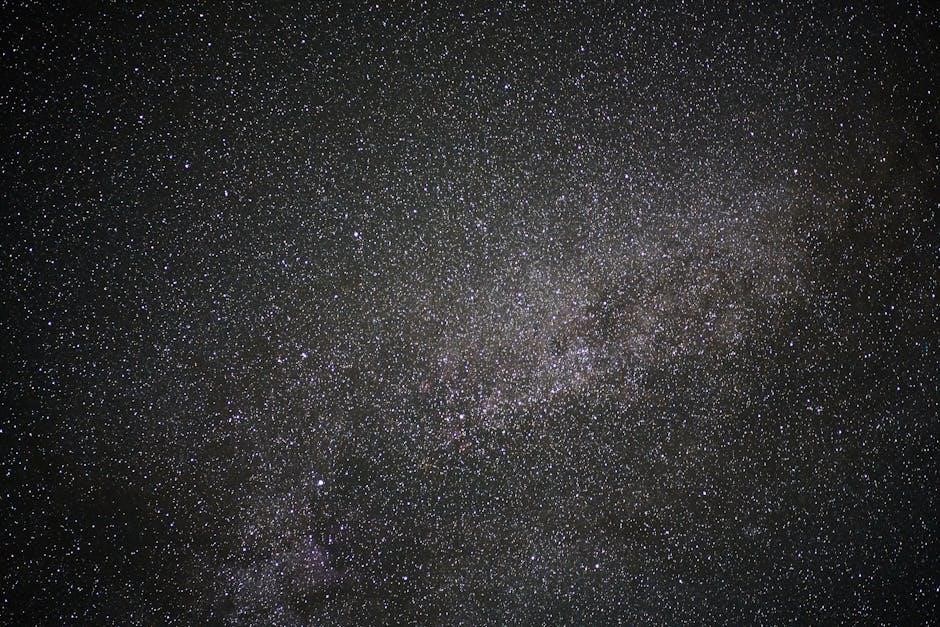
Estimating the Number of Stars in the Milky Way
PDF reports detail current estimates of roughly 100 billion stars within the Milky Way‚ though this figure varies based on numerous influencing factors.
Current Estimates: 100 Billion Stars
Astronomical PDFs consistently cite an approximate figure of 100 billion stars residing within our Milky Way galaxy. However‚ it’s crucial to understand this isn’t a definitive number‚ but rather a carefully considered estimate. PDF-based research highlights that determining an exact count is incredibly complex‚ influenced by factors like distance‚ interstellar dust‚ and telescope capabilities. These PDF documents often detail the methodologies used to arrive at this estimate‚ acknowledging inherent uncertainties. Discoveries detailed in PDF reports‚ such as those concerning Abell 370‚ contribute to refining these galactic star count models.
Factors Influencing Milky Way Star Count Estimates
PDF analyses reveal several key factors complicating Milky Way star count estimations. Distance and redshift significantly impact observed brightness‚ affecting detection rates detailed in PDF reports. Interstellar dust and gas obscure light‚ leading to undercounts‚ as discussed in numerous PDF publications. Furthermore‚ telescope resolution and sensitivity‚ outlined within PDF specifications‚ limit the ability to detect fainter‚ more distant stars. These limitations are frequently acknowledged within the methodology sections of PDF-based astronomical studies‚ impacting the 100 billion star estimate.
Methods for Estimating Star Counts in the Milky Way
PDF documents detailing astronomical research showcase diverse estimation methods. Analyzing luminosity functions‚ often presented in PDF tables‚ helps model stellar populations. Star formation rates‚ detailed in PDF reports‚ provide insights into star birth. Galactic models‚ frequently visualized in PDF figures‚ simulate star distribution. These methods‚ documented within PDF research papers‚ contribute to the current estimate of 100 billion stars‚ acknowledging inherent uncertainties. PDF data allows for comparative analysis of these techniques.
Analyzing Star Count Data in PDFs
PDF analysis software extracts star count data‚ enabling statistical assessments of discoveries like those in Abell 370 and distant galaxy clusters.
Software Tools for PDF Analysis
Numerous software solutions aid in extracting and analyzing star count data embedded within PDF documents. Tools like Adobe Acrobat Pro facilitate text recognition and data export. Python libraries‚ such as PyPDF2 and pdfminer.six‚ offer programmatic access to PDF content‚ enabling automated star count extraction. Specialized astronomical software may also integrate PDF parsing capabilities‚ streamlining the analysis of published findings regarding distant galaxies and clusters like Abell 370. These tools are crucial for processing the large datasets associated with modern star count research‚ ultimately contributing to our understanding of the universe.
Data Extraction Techniques
Extracting star count data from PDFs often involves Optical Character Recognition (OCR) to convert images of tables and text into machine-readable formats. Regular expressions can then pinpoint specific numerical data representing star quantities‚ like those found in studies of Abell 370 or galaxies 6.5 billion light-years distant. Manual curation is frequently necessary to validate extracted values‚ especially when dealing with complex layouts or inconsistent formatting within the PDF documents. Accurate extraction is vital for reliable statistical analysis.
Statistical Analysis of Star Count Data
Analyzing star count data extracted from PDFs requires robust statistical methods. Techniques like calculating means‚ standard deviations‚ and distributions help assess the reliability of reported star numbers‚ such as the estimated 100 billion within the Milky Way. Comparing data from different sources – Hubble‚ Webb‚ ground-based observatories – demands careful consideration of observational biases and error margins. Statistical modeling aids in understanding variations and confirming discoveries like those in Abell 370.

The Significance of Large Star Count Discoveries
Large star counts‚ documented in PDFs‚ illuminate galaxy formation‚ trace the universe’s evolution‚ and rigorously test prevailing cosmological models with new data.
Understanding Galaxy Formation
PDF-archived star counts‚ particularly from distant galaxy clusters like Abell 370‚ provide crucial insights into how galaxies assemble over cosmic time. Analyzing the sheer number of stars detected at extreme distances—reaching 6.5 billion light-years—helps astronomers model the early stages of galactic development.
These observations constrain theories regarding star formation rates‚ the role of dark matter halos‚ and the processes driving the growth of galactic structures. The data within these PDFs allows for comparative studies‚ revealing how galaxy formation has evolved throughout the universe’s history.
Tracing the Evolution of the Universe
PDF-based star count data acts as a historical record‚ allowing astronomers to trace the universe’s evolution by examining stellar populations at varying distances and redshifts. Discoveries of massive star concentrations‚ like those 6.5 billion light-years away‚ offer snapshots of the universe at earlier epochs.
By analyzing these PDF archives‚ researchers can map the changing density of stars‚ understand the rate of cosmic expansion‚ and test models of how the universe has transformed from its initial state to its present form‚ revealing its dynamic history.
Testing Cosmological Models
PDF archives containing star count data provide crucial observational evidence for validating cosmological models. The sheer number of stars detected in distant galaxy clusters‚ like Abell 370‚ challenges and refines existing theories about dark matter distribution and galaxy formation.
Comparing observed star counts with predictions from these models—regarding stellar density and evolution—helps astronomers assess their accuracy and identify areas needing further investigation‚ ultimately improving our understanding of the universe’s fundamental properties.

Future of Star Count Research
PDF data analysis will benefit from next-generation telescopes and advanced techniques‚ enabling the discovery of even more distant stars and galaxies.
Next-Generation Telescopes
Future advancements hinge on powerful telescopes‚ promising detailed PDF-archived star count data. These instruments will pierce through cosmic dust‚ revealing previously unseen stars in distant galaxies‚ potentially reshaping our understanding of galactic formation. Expect higher resolution images‚ leading to more accurate counts and detailed analysis presented within comprehensive PDF reports. Such data will refine estimates of stars within the Milky Way and beyond‚ pushing the boundaries of cosmological models and offering insights into the universe’s evolution‚ all documented in accessible PDF formats.
Advanced Data Analysis Techniques
Sophisticated algorithms are crucial for extracting meaningful star counts from complex PDF datasets. These techniques will automate data extraction‚ minimizing errors and accelerating research. Statistical analysis within specialized software will identify patterns and anomalies in PDF-presented data‚ improving accuracy. Machine learning models can be trained to recognize stars even in noisy images‚ enhancing the reliability of counts documented in PDF reports‚ ultimately refining our understanding of galactic structures and the universe’s vastness.
The Search for Even More Distant Stars
Next-generation telescopes‚ coupled with advanced PDF data analysis‚ promise to push the boundaries of observable star distances. Researchers are actively seeking to identify stars beyond the current record‚ documented within PDF archives from missions like JWST. Analyzing these PDF-based discoveries will refine cosmological models and deepen our understanding of early galaxy formation‚ potentially revealing insights into the universe’s evolution and the sheer number of stars existing at extreme distances.

PDF Data and the Observable Universe
PDF archives document star counts‚ revealing limitations at extreme distances‚ yet expanding our knowledge of the universe’s vastness and stellar populations.
Defining the Observable Universe
The observable universe represents the spherical region of space from which light has had time to reach Earth since the Big Bang. PDF data detailing star counts‚ particularly those reaching 6.5 billion light-years away‚ help astronomers map this boundary. However‚ limitations exist; counting individual stars becomes increasingly difficult with distance. These PDF archives‚ containing data from telescopes like Hubble and James Webb‚ are crucial for understanding the universe’s scale and the distribution of galaxies and stars within it‚ even as we approach the cosmic horizon.
Limitations of Star Counts at Extreme Distances
PDF-based star count data faces challenges at vast cosmic distances. Individual star detection becomes “near-impossible” as light diminishes and redshifts increase. While discoveries like those in Abell 370 (4 billion light-years) are significant‚ counting stars 6.5 billion light-years away pushes observational limits. PDFs document these constraints‚ acknowledging that current technology struggles to resolve individual stars in extremely distant galaxies‚ impacting the accuracy of total star estimations within the observable universe.
The Role of PDFs in Expanding Our Knowledge
PDF documents are crucial for disseminating findings from star count research‚ archiving data from telescopes like Hubble and James Webb. They detail discoveries – from Abell 370’s star populations to detections 6.5 billion light-years distant – enabling wider scientific scrutiny. These PDFs contribute to refining estimates of the Milky Way’s 100 billion stars and furthering our understanding of galaxy formation and the universe’s evolution‚ despite inherent observational limitations.

Common Issues with Star Count PDFs
PDFs can suffer from data corruption‚ large file sizes hindering access‚ and accessibility limitations‚ impacting the distribution of crucial star count information.
Data Corruption
Data corruption within star count PDFs presents a significant challenge to astronomical research. Errors during file transfer‚ storage issues‚ or software glitches can compromise the integrity of the recorded data. This can manifest as missing star entries‚ inaccurate positional information‚ or distorted magnitude measurements.
Consequently‚ researchers must employ rigorous verification methods‚ often cross-referencing data with original sources or independent observations‚ to mitigate the impact of corrupted PDF files and ensure reliable results when analyzing star populations.
File Size Limitations
PDFs containing extensive star count data‚ particularly from surveys of distant galaxies or large clusters like Abell 370‚ can quickly reach substantial file sizes. This poses practical challenges for storage‚ sharing‚ and processing.
Large PDFs may become unwieldy for standard software‚ leading to slower loading times and potential compatibility issues. Compression techniques are often employed‚ but excessive compression can sometimes degrade image quality and data precision‚ impacting the accuracy of star counts.
Accessibility Concerns
PDF formats used for disseminating star count data can present accessibility hurdles for researchers with visual impairments. Images of star fields‚ crucial for analysis‚ often lack sufficient alternative text descriptions.
This limits access for screen readers and other assistive technologies. Complex layouts and tables within PDFs can also be difficult to navigate without visual cues. Ensuring proper tagging and structuring of PDF documents is vital for inclusive astronomical research.
Resources for Star Count PDFs
NASA’s ADS‚ the Space Telescope Science Institute‚ and Astrophysical Journal publications are key repositories for accessing star count research PDFs.
NASA Astrophysics Data System (ADS)
NASA’s Astrophysics Data System (ADS) is an invaluable online resource for astronomers and researchers seeking published papers on star counts. It provides access to a vast collection of digitized literature‚ including PDF versions of research articles detailing discoveries like those within galaxy clusters such as Abell 370.
ADS allows users to search specifically for studies analyzing star populations at immense distances – even 6.5 billion light-years away – and explore data related to estimating the 100 billion stars within the Milky Way. Its comprehensive indexing makes it a central hub for accessing star count information.
Space Telescope Science Institute (STScI)
The Space Telescope Science Institute (STScI)‚ responsible for operating the Hubble and James Webb Space Telescopes‚ offers a wealth of PDF-based data and research findings related to star counts. Their archives contain detailed analyses of distant galaxies‚ including those 6.5 billion light-years removed‚ and studies of clusters like Abell 370.
STScI provides access to processed images and accompanying documentation‚ often in PDF format‚ enabling researchers to independently verify and analyze star population data. This supports ongoing efforts to refine estimates of the Milky Way’s 100 billion stars.
Astrophysical Journal Publications
Astrophysical Journal publications frequently detail groundbreaking star count discoveries‚ often released alongside supporting data in PDF format. These papers document analyses of distant galaxy clusters‚ such as Abell 370‚ and observations of galaxies 6.5 billion light-years away‚ revealing unprecedented stellar populations.
Researchers utilize these PDFs to access methodologies and raw data‚ contributing to our understanding of the estimated 100 billion stars within the Milky Way and the broader universe’s evolution.